The client pushes back
Somebody senior asks where a number came from. What answers them is a record rather than a recollection.

Claims that survive the client challenge, the staff change and the offboarding. A prompt register with a history behind it, an approval with a name on it, and a pack the next team can pick up.
Not every engagement needs this. These four do.
Somebody senior asks where a number came from. What answers them is a record rather than a recollection.
Regulated, listed, or simply careful. Claims that reach a deck need something standing behind them.
The register, the reasoning and the caveats have to outlive the account lead.
An incoming team, in house or another agency, has to continue the series rather than start a new one.
Three things kept apart, and a record of how each of them changed.
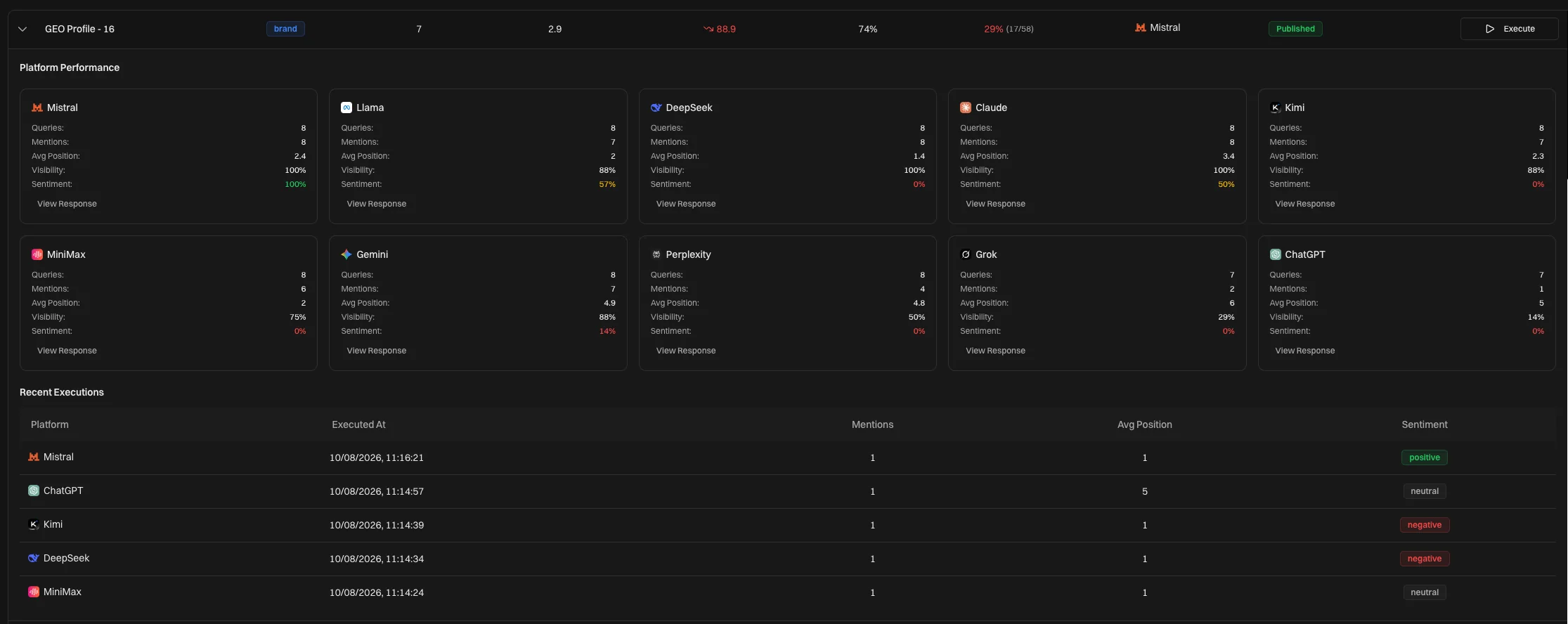
What the engine said. What you concluded from it. What the client agreed to do. A pack that blurs the three cannot be checked.
Not only the questions being asked now, but when they changed and why.
Who signed off which report, and what language it permitted.
What moved, what held, and what was asked differently.
What leaves with the client if the relationship ends.
Eight stages, each with somebody who owns it.
The client says what they want known and which brands count as competitors.
Agreed together and frozen. Changes from here are versioned rather than quiet.
The agency runs the register and keeps the raw answers it returned.
Somebody other than the person who ran it reads the answers before the client does.
Sign off on the report, and on what may be said publicly off the back of it.
The deck, the page or the pitch that uses the number.
When the register or the method changes, the old series is closed rather than quietly rewritten.
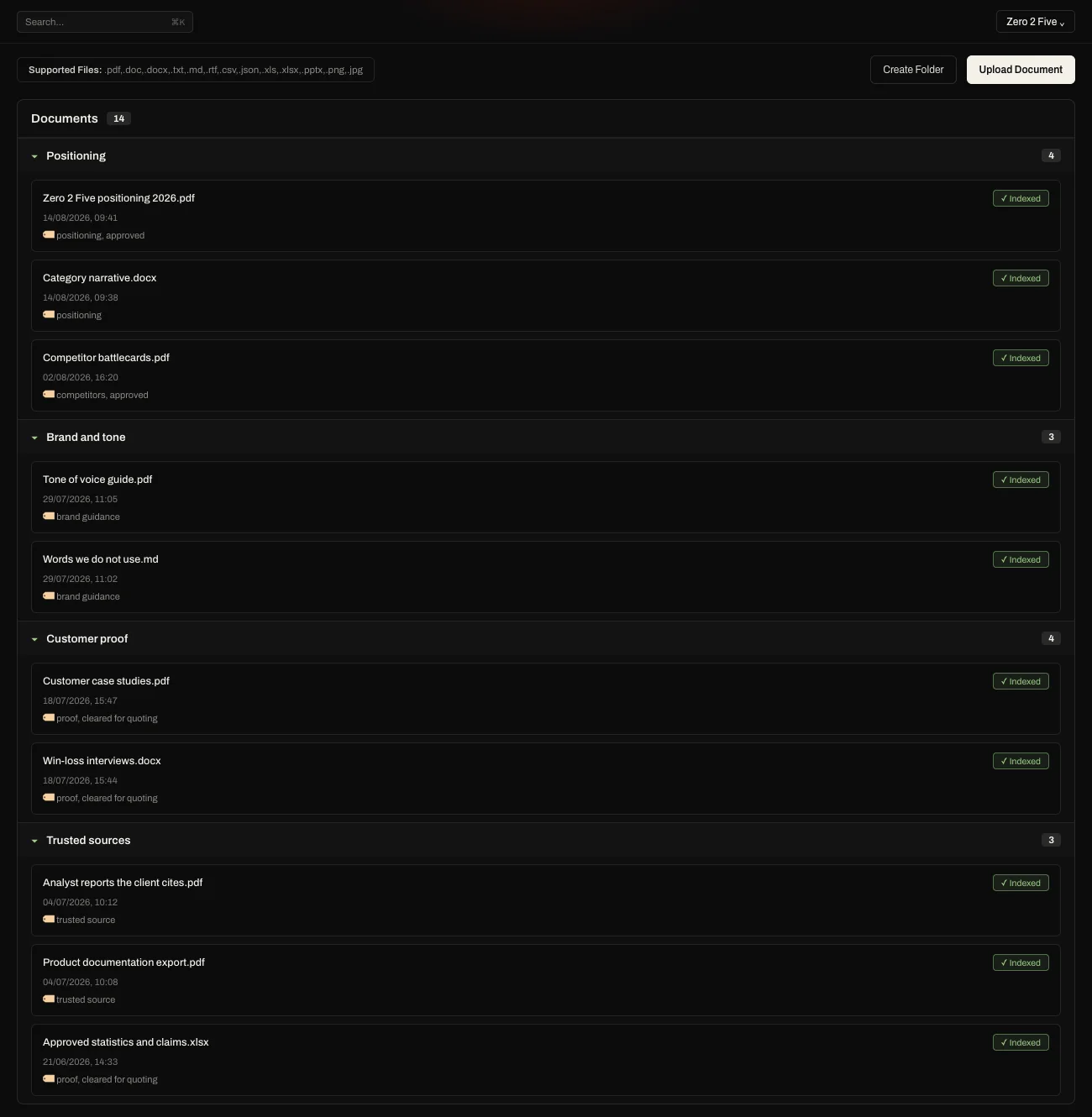
Everything the next team needs, handed over once.
Portfolio work fails on this before it fails on anything else.
A prompt set written for one brand belongs to that brand, and reusing it elsewhere makes both studies suspect.
Naming one client's competitor inside another client's workspace is the kind of mistake that ends an account.
Runs, answers and scores belong to the workspace that produced them.
In Eclipse a person is assigned to the clients they work on, and each client workspace is isolated from every other.
An approval that covers only the report is not an approval.
The questions, and the date they were frozen.
What mention, citation and recommendation mean inside this engagement.
Which run produced it, on which platforms, across which period.
What the client may say in a deck, and what they may not.
The test is whether the next team can continue the series without asking you anything.
Every version, with the date each one was frozen.
Enough to find the answers again rather than take them on trust.
The one the client signed, not the latest draft.
What the runs could not see, written down rather than remembered.
Who the brand was measured against, and when that set last changed.
The record is product. The governance around it is how an agency works.
Bring an account you already run. We will set up the register, the workspace and the first run on the call.